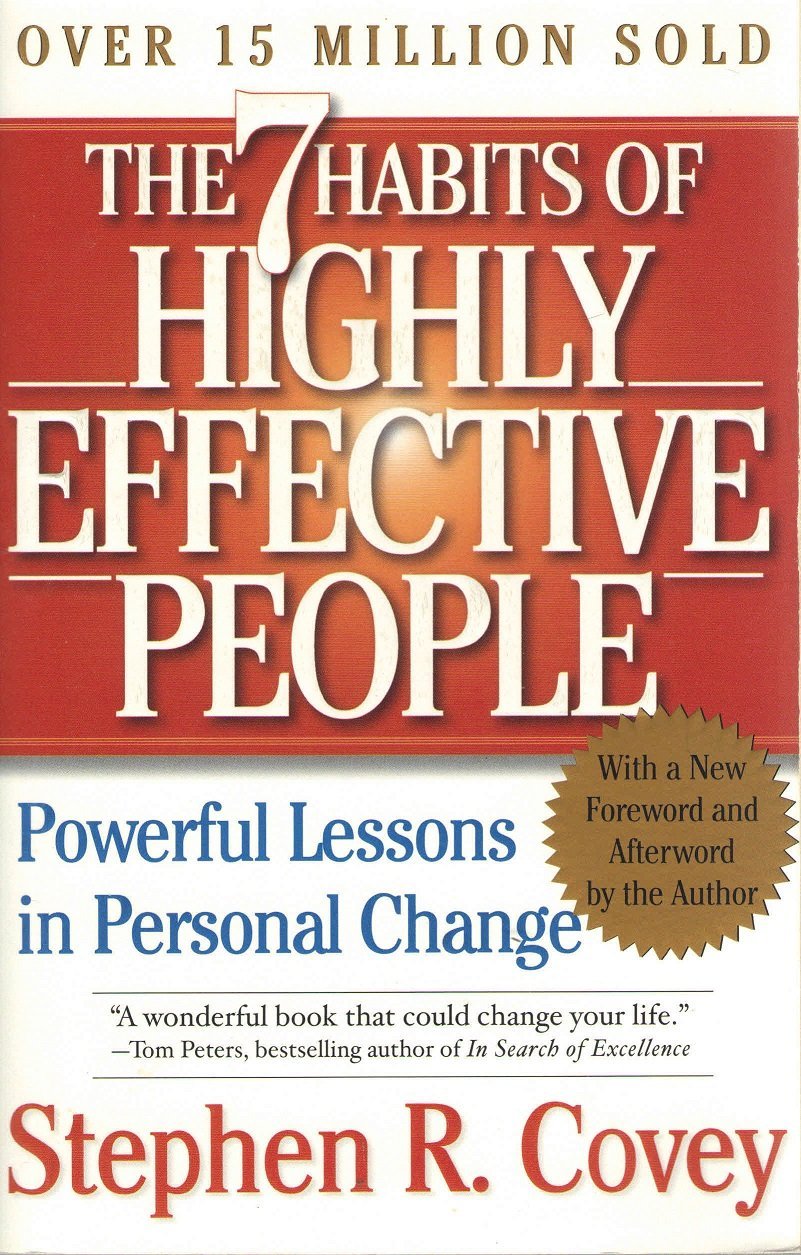
The 7 Habits of Highly Effective People by Stephen R. Covey is one of the most influential books in the field of personal development and leadership. First published in 1989, it has sold millions of copies worldwide and has been a key reference for those interested in improving their productivity, effectiveness, and focus in life. Covey not only offers a practical approach to success but also advocates for a profound mindset shift that involves both personal and professional transformation.
The book focuses on the concept of effectiveness, which for Covey is not just a result of doing things right but also doing the right things. Through his seven habits, Covey guides the reader through a process of transformation towards a more balanced and effective life. These habits, which cover areas such as self-management, communication, collaboration, and leadership, are organized into a progressive approach to personal growth.
Habit 1: Be Proactive
The first habit, “Be Proactive,” is based on the idea that people have the power to choose their responses to any situation. Covey distinguishes between proactive and reactive individuals. Proactive people take responsibility for their actions and do not allow external circumstances or emotions to dictate their behavior. In contrast, reactive people tend to blame others or circumstances for their problems.
Being proactive means taking control of our lives, assuming responsibility for our decisions, and recognizing that while we cannot control everything that happens around us, we can choose how to respond. This habit is the foundation for all the others, as it sets in motion the mindset of responsibility and autonomy.
Habit 2: Begin with the End in Mind
The second habit, “Begin with the End in Mind,” refers to the importance of having a clear and defined vision of what we want to achieve in life. Covey emphasizes that the most effective people are those who have a clear goal, whether personal or professional, and work focused towards that goal.
This habit invites deep reflection on what we truly want to achieve in life, both in the short and long term. Covey suggests creating a “personal mission statement,” a set of principles and values that guide our decisions and allow us to make choices aligned with our goals. It is essentially a call to live an intentional and purposeful life.
Habit 3: Put First Things First
The third habit, “Put First Things First,” focuses on time management and prioritization. Covey explains that the key to effectiveness is not doing more things but doing the most important things. This habit is about organizing our lives according to our priorities, putting the essential above the urgent.
Covey introduces the Eisenhower Matrix, which classifies tasks into four quadrants: urgent and important, not urgent and important, urgent and not important, and not urgent and not important. The habit of “putting first things first” invites us to focus on activities that bring us closer to our long-term goals and avoid distractions and urgencies that do not significantly contribute to our well-being or success.
Habit 4: Think Win-Win
The fourth habit, “Think Win-Win,” refers to the mindset that in any interaction, whether personal or professional, both parties can benefit. This approach goes beyond competition or conflict; it seeks collaboration and mutual benefit.
Covey explains that people who adopt this approach do not see themselves as competitors but as collaborators. By applying the principle of “win-win,” people can build relationships based on trust and mutual respect, which in the long run generates more sustainable and satisfying results for all involved.
Habit 5: Seek First to Understand, Then to Be Understood
The fifth habit, “Seek First to Understand, Then to Be Understood,” is a key principle in effective communication. Covey argues that most people listen to respond, not to understand. This habit invites us to change that approach, emphasizing active listening.
When we genuinely seek to understand others, we demonstrate respect and openness, which improves our interpersonal relationships and increases our influence. Only when we deeply understand the other person’s perspective can we offer an appropriate and constructive response.
Habit 6: Synergize
The sixth habit, “Synergize,” refers to the idea that the whole is greater than the sum of its parts. Synergy involves working as a team in a way that leverages the individual strengths of each member to achieve results that would not be possible if they worked separately.
Covey highlights that true synergy is achieved when individuals focus on their differences, not as obstacles, but as opportunities to create innovative solutions. This habit applies both in work teams and personal relationships, where collaboration and mutual respect allow new ideas and approaches to emerge.
Habit 7: Sharpen the Saw
The seventh and final habit, “Sharpen the Saw,” refers to the need to constantly renew ourselves in four fundamental areas: physical, mental, emotional, and spiritual. Covey explains that to maintain our effectiveness and avoid burnout, we must dedicate time to self-care and continuous growth.
“Sharpening the saw” involves making a deliberate effort to improve in these areas and maintain a healthy balance in our lives. Whether through physical exercise, reading, meditation, or time with loved ones, this habit reminds us of the importance of constant renewal to maintain our long-term effectiveness and happiness.
Conclusion: An Integral Approach to Personal and Professional Effectiveness
The 7 Habits of Highly Effective People is a profound work that goes beyond superficial productivity advice. Through these seven habits, Stephen Covey offers a guide to living a life of integrity, balance, and effectiveness, focused on self-discipline, relationship management, and personal leadership.
True effectiveness, according to Covey, is not achieved through effort alone but through a holistic approach that involves both the mind and the heart. The habits he proposes help us work not only on our skills but also on our mindset and values, transforming us into more conscious, effective, and authentic individuals.