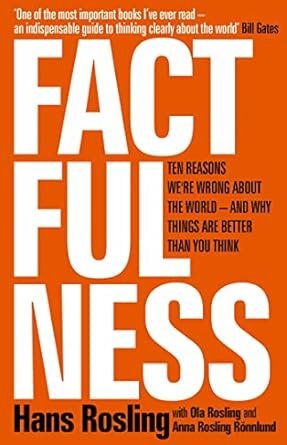
Factfulness, written by Hans Rosling, along with Ola Rosling and Anna Rosling Rönnlund, offers a refreshing perspective on how to understand the world based on real data, challenging biases and preconceptions that often distort our perception. This book is not only a manual for critical thinking but also an essential tool for personal development, corporate decision-making, and teamwork.
Through ten instincts that shape our view of the world, Rosling invites us to question our beliefs and make more informed and balanced decisions.
1. Breaking with Instincts: Seeing Reality As It Is
Rosling identifies human instincts, such as dramatization, generalization, and binary thinking, that make us perceive the world as more dangerous or worse than it really is. For example, we tend to divide the world into “developed and developing countries,” ignoring significant improvements in quality of life in many countries.
Application in Personal Development:
Learning to challenge our perceptions allows us to make more realistic decisions, avoiding unnecessary pessimism or fear. For example, when facing a problem, analyzing concrete data can help us discover opportunities where we previously saw obstacles.
In Corporate Teams:
Companies can use this lesson to review data before making strategic decisions. Instead of acting based on alarmist perceptions (such as a market downturn), it is crucial to analyze real patterns and trends.
2. Data Instead of Emotions
The book emphasizes the importance of basing our opinions on verifiable data rather than feelings or assumptions. Rosling suggests that we should adopt a “fact-based view” that recognizes positive trends in global education, health, and economy.
Group Application:
Teams working on projects should base their plans and strategies on solid analysis. This fosters clear communication and reduces misunderstandings. When addressing challenges, a data-driven approach can ensure that solutions are practical and effective.
3. The Urgency Instinct: The Power of Pause
One of the most important instincts Rosling highlights is the urgency instinct: the need to act immediately in response to a perceived problem. However, this impulse can lead to mistakes.
In Leadership:
Taking a moment to analyze the situation before acting can make the difference between an impulsive decision and a strategic one. A leader who applies the principle of pause not only avoids mistakes but also fosters a more reflective and less reactive work environment.
In Group Development:
In teams, the urgency instinct can create unnecessary stress. Adopting a more reflective mindset helps members collaborate more effectively, prioritize tasks correctly, and avoid conflicts arising from rushed decisions.
4. The Importance of Global Perspective
Factfulness invites us to see the big picture, avoiding extremes. Hans Rosling divides the world into four income levels instead of just “rich” and “poor” to show how economic improvements have benefited millions.
Personal Impact:
Adopting a global perspective helps us maintain a balanced attitude. For example, understanding that the problems we face may be less severe when viewed in a broader context.
In Corporate and Group Teams:
Fostering a global perspective in an organization allows identifying business opportunities in emerging markets. In groups, this vision helps understand the diversity of thoughts and experiences, promoting more inclusive and enriching teamwork.
5. Factfulness as a Practical Skill:
Essentially, Factfulness is more than a book; it is a guide to navigating a complex world without falling into despair or popular myths. Rosling offers practical tools, such as questioning information sources, breaking down large problems into manageable parts, and looking for patterns in data.
Relevance in Teamwork:
This skill is invaluable for problem analysis and decision-making. A team that adopts fact-based thinking can work with greater objectivity, avoiding conflicts arising from misunderstandings or erroneous beliefs.
In Strategic Planning:
Organizations that use Factfulness principles are more resilient in the face of crises, as their decisions are based on solid evidence. Additionally, it fosters a business culture that values transparency and accuracy.
Conclusion: An Approach for a Better Future:
Factfulness teaches us that although the world faces challenges, there are many reasons for optimism based on facts. Adopting this mindset not only improves our personal lives but also transforms the way we collaborate and lead in teams and organizations.
For anyone or any company looking to navigate complexity with clarity and confidence, the principles of Factfulness offer a map towards a more informed and balanced future.
I hope this translation meets your needs! If you have any further questions or need additional assistance, feel free to ask.